Tuesday, May 18, 2010

YPA Counts Down the Top Ten: #4 Hulton Bridge, Oakmont-Harmarville

For the next several days, until May 21, YPA will count down its 2010 list of the Top Ten Best Preservation Opportunities on its blog. On Friday, May 21, YPA will host a Historic Preservation Month Celebration, "Old is the New Green," at the Kelly-Strayhorn Theater in East Liberty, starting at 6:00 p.m.


Registration details are on YPA's website, http://www.youngpreservationists.org.


Since 2003, YPA has celebrated historic preservation with its annual list of the Top Ten Best Preservation Opportunities in the Pittsburgh Area. The list, compiled from nominations received from various individuals and organizations, is designed to encourage investment in historic sites throughout the nine-county southwestern Pennsylvania region. The list has been used by property owners to draw positive attention to their properties, raise investment funds, secure grants, and generate political goodwill for their historic sites.


The sites featured on YPA's list come from six different counties and include industrial structures, Main Street commercial buildings, schools, a train station, and a bridge. Main Street features prominently in the list, with four of the Top Ten sites being situated in an existing Main Street commercial district. The remaining six sites are within blocks of an existing Main Street community.


The criteria used to select the Top Ten List include the following:

1. 50-year Threshold (is it 50 years old or older);

2. Historic & Architectural Significance;

3. Threats to the Site;

4. Community Input; and

5. Feasibility of the Solution.


#4 Hulton Bridge, Harmarville-Oakmont

Constructed in 1908-1909 over the Allegheny River, the simple truss bridge connects the boroughs of Oakmont and Harmarville. It was the first bridge to be built by Allegheny County over the Allegheny River. It was named for the Hulton family, who owned a third of present-day Oakmont and had operated a ferry company at the location since 1864.


In late 2009 PennDOT announced its plans to demolish the bridge by 2012 and build a new four-lane bridge upstream, explaining that the bridge is still structurally sound but is functionally obsolete. Pennsylvania’s historic bridges are disappearing at an alarming rate, with one estimate stating that they will all be gone by 2016.


Students from Carnegie Mellon University have come up with a plan to turn the bridge into a pedestrian and biking bridge that connects to the Allegheny Trail. The cost of demolishing the bridge would be $6-10 million, but the students estimated that the conversion costs would be around $300,000. A survey of Oakmont residents found that 70% of residents said they would use the converted bridge and 44% said they would help with its conversion.


The students’ plan appears to be the best alternative. But Penn DOT explains that funds are needed for lighting and snow removal as well as maintenance costs. Also, they would need to find an organization willing to be legally responsible for the structure.

Monday, May 17, 2010

YPA Counts Down the Top Ten: #5 134 Grant Avenue, Vandergrift

For the next several days, until May 21, YPA will count down its 2010 list of the Top Ten Best Preservation Opportunities on its blog. On Friday, May 21, YPA will host a Historic Preservation Month Celebration, "Old is the New Green," at the Kelly-Strayhorn Theater in East Liberty, starting at 6:00 p.m.


Registration details are on YPA's website, http://www.youngpreservationists.org.


Since 2003, YPA has celebrated historic preservation with its annual list of the Top Ten Best Preservation Opportunities in the Pittsburgh Area. The list, compiled from nominations received from various individuals and organizations, is designed to encourage investment in historic sites throughout the nine-county southwestern Pennsylvania region. The list has been used by property owners to draw positive attention to their properties, raise investment funds, secure grants, and generate political goodwill for their historic sites.


The sites featured on YPA's list come from six different counties and include industrial structures, Main Street commercial buildings, schools, a train station, and a bridge. Main Street features prominently in the list, with four of the Top Ten sites being situated in an existing Main Street commercial district. The remaining six sites are within blocks of an existing Main Street community.


The criteria used to select the Top Ten List include the following:

1. 50-year Threshold (is it 50 years old or older);

2. Historic & Architectural Significance;

3. Threats to the Site;

4. Community Input; and

5. Feasibility of the Solution.


#5 134 Grant Avenue, Vandergrift

The building at 134 Grant Avenue in Vandergrift, Westmoreland County, was constructed in 1900, just five years after the founding of the city. From 1903 to 1940 it was occupied by Shepler Co., a mercantile shop. From 1940 to 1956 it was an A&P grocery store, from 1956 to about 1980 it was occupied by J.C. Penny’s, and from 1980 to the late 1990’s it was occupied by the Vandergrift News offices. The Vandergrift Improvement Program (VIP) purchased the building in 2008 and it has remained vacant as they create plans for the building’s use.


The VIP would like to restore 134 Grant Avenue and utilize it as a community arts center with small business incubator space. The project to restore this structure and turn it into a community arts center with retail incubators has been broken into two phases. Phase I would involve repairs to the roof and general building systems, a restoration of the façade, and construction on the first floor. The first floor space will include the business incubators as well as the main art center area. Phase II would involve build-out in the basement, second floor mezzanine, and third floor.


Working with seed capital from PHLF and the Allegheny Foundation, the VIP has been working to approach foundations for funding and has been considering financial support from different members of the community.

Sunday, May 16, 2010

YPA Counts Down the Top Ten: #6 Miles Bryan School, McKees Rocks

For the next several days, until May 21, YPA will count down its 2010 list of the Top Ten Best Preservation Opportunities on its blog. On Friday, May 21, YPA will host a Historic Preservation Month Celebration, "Old is the New Green," at the Kelly-Strayhorn Theater in East Liberty, starting at 6:00 p.m.


Registration details are on YPA's website, http://www.youngpreservationists.org.


Since 2003, YPA has celebrated historic preservation with its annual list of the Top Ten Best Preservation Opportunities in the Pittsburgh Area. The list, compiled from nominations received from various individuals and organizations, is designed to encourage investment in historic sites throughout the nine-county southwestern Pennsylvania region. The list has been used by property owners to draw positive attention to their properties, raise investment funds, secure grants, and generate political goodwill for their historic sites.


The sites featured on YPA's list come from six different counties and include industrial structures, Main Street commercial buildings, schools, a train station, and a bridge. Main Street features prominently in the list, with four of the Top Ten sites being situated in an existing Main Street commercial district. The remaining six sites are within blocks of an existing Main Street community.


The criteria used to select the Top Ten List include the following:

1. 50-year Threshold (is it 50 years old or older);

2. Historic & Architectural Significance;

3. Threats to the Site;

4. Community Input; and

5. Feasibility of the Solution.


#6 Miles Bryan School, McKees Rocks

Miles Bryan was one of the early leaders of Frank Bryan, Inc. He is credited for his role in building the McKees Rocks Bridge in addition to this building, which was constructed in 1928.


When the McKees Rocks and Stowe school districts merged to form Sto-Rox in 1966, Miles Bryan became Sto-Rox Middle School and served in that function until its closing in 1997. The breadth of young people and talented professionals to pass through its doors and enjoy the splendor of its grounds spans several generations. Grandparents and grandchildren alike share fond memories of this magnificent place.


Since its closing in 1997, Miles Bryan has sat vacant. Sto-Rox Schools sold the building in 2000 to a team of private investors; however the development plans quickly fizzled, and they began shopping the property around for sale.


The McKees Rocks Community Development Corporation currently has this property under agreement and is pursuing a development partner to convert the building into mid-range residential loft condominium. The building is ideally suited for this end-use, as the classroom layout translates directly into well-sized condo units. MRCDC is already exploring the economic feasibility of this use with a regional developer at this time. The McKees Rocks Historical Society has made Miles Bryan one of its priority sites, and is honored to be one of YPA’s Top Ten Best Preservation Opportunities.

Saturday, May 15, 2010

YPA Counts Down the Top Ten: #7 Aaron's Building, Connellsville

For the next several days, until May 21, YPA will count down its 2010 list of the Top Ten Best Preservation Opportunities on its blog. On Friday, May 21, YPA will host a Historic Preservation Month Celebration, "Old is the New Green," at the Kelly-Strayhorn Theater in East Liberty, starting at 6:00 p.m.


Registration details are on YPA's website, http://www.youngpreservationists.org.


Since 2003, YPA has celebrated historic preservation with its annual list of the Top Ten Best Preservation Opportunities in the Pittsburgh Area. The list, compiled from nominations received from various individuals and organizations, is designed to encourage investment in historic sites throughout the nine-county southwestern Pennsylvania region. The list has been used by property owners to draw positive attention to their properties, raise investment funds, secure grants, and generate political goodwill for their historic sites.


The sites featured on YPA's list come from six different counties and include industrial structures, Main Street commercial buildings, schools, a train station, and a bridge. Main Street features prominently in the list, with four of the Top Ten sites being situated in an existing Main Street commercial district. The remaining six sites are within blocks of an existing Main Street community.


The criteria used to select the Top Ten List include the following:

1. 50-year Threshold (is it 50 years old or older);

2. Historic & Architectural Significance;

3. Threats to the Site;

4. Community Input; and

5. Feasibility of the Solution.


#7 The Aaron’s Building, Connellsville


The Aaron’s Building is historically important for having once housed Connellsville’s greatest furniture retailer. The Aaron’s Furniture Store was founded in Connellsville by Myer Aaron, a Jewish immigrant merchant.


In a city where a considerable amount of historic building fabric has been lost or detrimentally altered, the Aaron Building is the last great remnant of a once thriving district of furniture retailers and, to a greater extent, a physical reminder of the once bustling commercial core of Connellsville. Among the tallest buildings in the city, the Aaron Building was one of several “skyscrapers” to be built at the opening of the 20th century in Connellsville. It is among the last to remain.


The building has been abandoned since the 1970s and has suffered from neglect. Absentee ownership and unfinished construction work on the building in the mid-2000s has caused the building to deteriorate further. Its roof is in need of immediate repair and a wall facing a vacant lot on Pittsburgh Street needs to be stabilized.


The Aaron Building would be a tremendous opportunity for the beginnings of a revitalized Connellsville. The building would be an ideal location for a boutique hotel, a restaurant, apartments, offices, or any number of other ventures that can complement the Great Allegheny Passage Hike and Bike Trail.

Friday, May 14, 2010

YPA Counts Down the Top Ten: #8 Gladstone School, Hazelwood

For the next several days, until May 21, YPA will count down its 2010 list of the Top Ten Best Preservation Opportunities on its blog. On Friday, May 21, YPA will host a Historic Preservation Month Celebration, "Old is the New Green," at the Kelly-Strayhorn Theater in East Liberty, starting at 6:00 p.m.


Registration details are on YPA's website, http://www.youngpreservationists.org.


Since 2003, YPA has celebrated historic preservation with its annual list of the Top Ten Best Preservation Opportunities in the Pittsburgh Area. The list, compiled from nominations received from various individuals and organizations, is designed to encourage investment in historic sites throughout the nine-county southwestern Pennsylvania region. The list has been used by property owners to draw positive attention to their properties, raise investment funds, secure grants, and generate political goodwill for their historic sites.


The sites featured on YPA's list come from six different counties and include industrial structures, Main Street commercial buildings, schools, a train station, and a bridge. Main Street features prominently in the list, with four of the Top Ten sites being situated in an existing Main Street commercial district. The remaining six sites are within blocks of an existing Main Street community.


The criteria used to select the Top Ten List include the following:

1. 50-year Threshold (is it 50 years old or older);

2. Historic & Architectural Significance;

3. Threats to the Site;

4. Community Input; and

5. Feasibility of the Solution.


#8 Gladstone School, Hazelwood

Featured in YPA’s Preserve Pittsburgh Summit on April 10, 2010, Gladstone School sits in Pittsburgh’s neighborhood of Hazelwood, the cradle of the city’s founding. Gladstone was opened in 1914 and closed 87 years later, in 2001. When the school was closed, the site had long been the center of community activities and meetings.


With strong support from the Hazelwood Initiative, a local organization intent on revitalizing the suffering neighborhood as well as particular attention from the Urban Redevelopment Authority of Pittsburgh, the Gladstone school is capable of being preserved and put to good use by its community.


A proposal put together by students from Carnegie Mellon University’s Remaking Cities Institute in 2008 presents a plan to use the lower building as a community center until the School District is willing to reinvest in the school which was renovated in the late 1990s and already possesses a pool, theater space, and gymnasium, probably within the next twenty years. The adjacent building, they suggest, could become space for artists to contribute to the community center’s programs for children, older youth and families.


On a larger scale, RCI’s project proposes an accessible green walkway called the Hazelwood Community Connector that blazes a welcoming path from Gladstone to Second Avenue, the commercial district of Hazelwood. The restored school buildings and Connector will feasibly attract residents who will in turn patronize the business district.


Thursday, May 13, 2010

YPA Counts Down the Top Ten: #9 Bantam Building, Butler County

For the next several days, until May 21, YPA will count down its 2010 list of the Top Ten Best Preservation Opportunities on its blog. On Friday, May 21, YPA will host a Historic Preservation Month Celebration, "Old is the New Green," at the Kelly-Strayhorn Theater in East Liberty, starting at 6:00 p.m.

Registration details are on YPA's website, http://www.youngpreservationists.org.

Since 2003, YPA has celebrated historic preservation with its annual list of the Top Ten Best Preservation Opportunities in the Pittsburgh Area. The list, compiled from nominations received from various individuals and organizations, is designed to encourage investment in historic sites throughout the nine-county southwestern Pennsylvania region. The list has been used by property owners to draw positive attention to their properties, raise investment funds, secure grants, and generate political goodwill for their historic sites.

The sites featured on YPA's list come from six different counties and include industrial structures, Main Street commercial buildings, schools, a train station, and a bridge. Main Street features prominently in the list, with four of the Top Ten sites being situated in an existing Main Street commercial district. The remaining six sites are within blocks of an existing Main Street community.

The criteria used to select the Top Ten List include the following:
1. 50-year Threshold (is it 50 years old or older);
2. Historic & Architectural Significance;
3. Threats to the Site;
4. Community Input; and
5. Feasibility of the Solution.


#9 Bantam Building, Butler County

The Bantam building was built circa 1899-1900 by the Davis Lead Company, which later became the American Bantam Car Company circa 1929. The building’s historical significance came in 1940 when freelance design engineer Karl Probst and the American Bantam Car Company designed the winning U.S. Army prototype for a new Second World War military vehicle. The American Bantam Car Factory was the birthplace of the first jeep, and was commissioned to produce nearly 3,000 jeeps to help with the war efforts.


The Butler County Tourism & Convention Bureau and City of Butler are presently working with AK Steel (current building and property owner) to protect this 10,000-square-foot vacant building from further deterioration.


Several community groups including the Butler County Tourism & Convention Bureau, the Butler County Historical Society, Butler Downtown, and the City of Butler would like to see this building preserved as a reminder of the great importance the jeep played in helping end the Second World War and becoming a brand that is still being used today. In 2010-11 the Butler County Tourism Bureau will be remembering and celebrating this invention with the first Jeep Heritage Festival to mark the 70th year of the invention of the jeep.

Wednesday, May 12, 2010

Old is the New Green

Today, the Young Preservationists Association of Pittsburgh releases the first of its Top Ten Best Preservation Opportunities in the Pittsburgh Area.

Since 2003, YPA has celebrated historic preservation with its annual list of the Top Ten Best Preservation Opportunities in the Pittsburgh Area. The list, compiled from nominations received from various individuals and organizations, is designed to encourage investment in historic sites throughout the nine-county southwestern Pennsylvania region. The list has been used by property owners to draw positive attention to their properties, raise investment funds, secure grants, and generate political goodwill for their historic sites.

The sites featured on YPA's list come from six different counties and include industrial structures, Main Street commercial buildings, schools, a train station, and a bridge. Main Street features prominently in the list, with four of the Top Ten sites being situated in an existing Main Street commercial district. The remaining six sites are within blocks of an existing Main Street community.

The criteria used to select the Top Ten List include the following:
1. 50-year Threshold (is it 50 years old or older);
2. Historic & Architectural Significance;
3. Threats to the Site;
4. Community Input; and
5. Feasibility of the Solution.

YPA’s companion report, “The Economic Impact of Historic Preservation in Southwestern Pennsylvania,” which will be released on May 20, 2010, demonstrates the immense economic impact that historic preservation has had on various communities.


The data show that over the last seven years, more than $80 million has been invested into properties placed on YPA’s Top 10 List. Consequently, this created the following results:

> $1.30 of private financing for every $1 of public investment was generated,

> 1,245 construction and trade-related jobs created,

> production of 230 housing units resulted,

> $750,000 in additional annual wage tax revenue is yielded to state and local municipalities, and

> a total of 401 permanent employment positions were created.


Since YPA’s first Top Ten List was first published, only three sites have been lost.


As YPA’s Top Ten List continues to show, an investment in historic properties is not only good for the economy, it is good for the environment. What better way to save the earth than to reuse what we have already built.


This is important for a new generation concerned with the environment and in search of jobs that cannot be outsourced. That’s the power of preservation!


Over the next nine days, YPA will release its Top Ten List, counting down from number ten, listed below. All Top Ten sites will be published in a special report. In addition, YPA will also release a new report, "Homage to the Fallen," which honors ten buildings we wish we had back.


YPA will release the reports at its Historic Preservation Month Celebration, "Old is the New Green," on Friday, May 21, at the Kelly-Strayhorn Theater, starting at 6:00 p.m.


Registration details are on YPA's website at http://www.youngpreservationists.org/


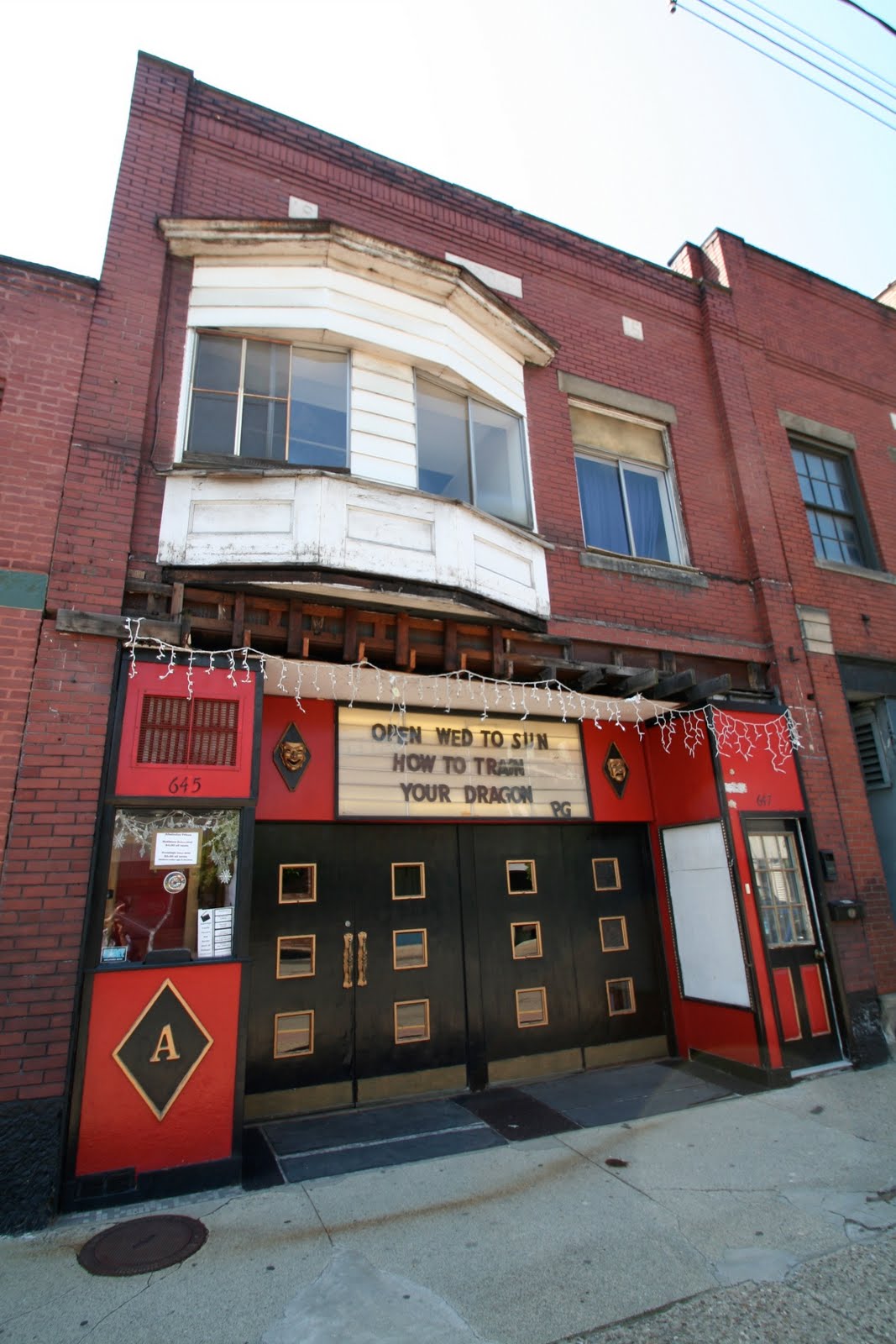
#10 Ambridge Theater

Built in 1915 as a sewing machine store, it was converted into a theater in 1967. It currently seats 167 people. The seats were purchased from the former Pittsburgh Playhouse during one of its renovations, and some of the equipment came from the former “Blue Sky” drive-in theater. It is the last remaining family-owned theater in Beaver County.


Ambridge has suffered lately, with the closure of its major National Historic Landmark, Old Economy Village, which only recently re-opened. But the town has lost many of its residents and young people. Still, there is a lot of vitality and great potential.


The building is in disarray and is in need of much repair. The original marquee has been lost, except for several remaining pieces due to fear of collapse a few years ago. The facility is in need of a new roof and renovation to the upstairs apartments. The fears of water damage affecting the main hall of the theatre are looming. The sound system is rather bare and is still running in mono. A major issue is the restrooms in the facility are not ADA compliant.


The community is proud to have this facility to call their own; unfortunately, crowds to the location are far from overwhelming, mainly due to appearance issues. The community has expressed great interest in seeing this theatre restored to its glory days and the need for a local historical entertainment venue is tremendous.